Patients present with hyperammonemia either shortly after birth 50 or later at any age. Urea cycle disorders UCDs result from inherited deficiencies in any one of the six enzymes or two transporters of the urea cycle pathway CPS1 OTC ASS1 ASL ARG1 NAGS ORNT1 or citrin.
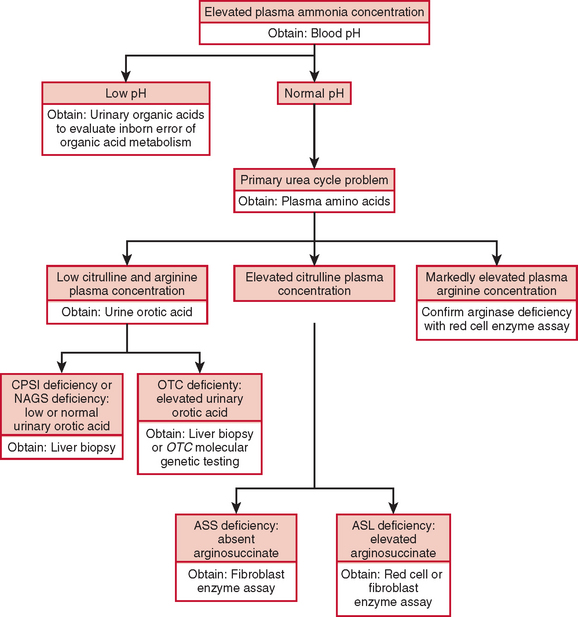
Urea Cycle Disorders Neupsy Key
Survival of children with UCD has significantly improved and the need for transitional care to adulthood has emerged.
Urea cycle disorder in adults. This can also lead to. Late-onset UCD refers to individuals who present with. Urea cycle disorders UCDs are rare inborn errors of metabolism that typically present in newborns.
These enzymes are responsible for removing ammonia from the blood stream. Deficiency of one of the enzymes involved in this process causes disorders collectively known as urea cycle disorders Gropman et al 2007. Assessing ammonia levels is a simple but critical test in patients with unexplained impaired consciousness.
All enzymes in this pathway can give rise to UCD. We report a perplexing presentation in a woman 4 days postpartum of bizarre and out-of-character behaviour interspersed with periods of complete normality. The biochemical hallmark of these disorders is hyperammonemia.
The liver is the main site of the urea cycle. RAVICTI should be used if the UCD cannot be managed with a low-protein diet and dietary supplements alone. Urea cycle disorders are inborn errors of metabolism that in rare cases can present for the first time in adulthood.
This article reviews the clinical presentation diagnosis treatment and drug-disease state implications of urea cycle disorders. There are two types of onset - neonatal onset and late onset. Urea cycle disorders UCDs are related to defects of enzymes involved in the urea cycle.
A urea cycle disorder is a genetic disease that affects how protein is broken down in the body. RAVICTI glycerol phenylbutyrate Oral Liquid is a prescription medicine used for long-term management of high blood levels of ammonia hyperammonemia caused by a condition called a urea cycle disorder UCD. Urea cycle disorders may also be diagnosed in adults and symptoms may include delirium episodes lethargy and symptoms similar to that of a stroke.
There are five different urea cycle enzymes in the body and therefore five different urea cycle disorders. Adult onset urea cycle disorders UCD may present with psychiatric symptoms occasionally as the initial presentation. Over 69 of cases occur outside the newborn period neonatal onset.
Metabolic decompensation is associated with hyperammonemia potentially leading to life threatening encephalopathy. The urea cycle involves a series of biochemical steps in which nitrogen a waste product of protein metabolism is changed to a compound called urea and. Adult onset UCD present with chronic or acute neurological psychiatric and.
Decompensation is often triggered by metabolic stress such as. State of the art. The prevalence is 1 in 10000 births with ornithine transcarbamylase OTC deficiency being the most common.
In very rare cases initial symptoms may present after age 6 often the result of a partial enzyme deficiency. It is therefore classified as a metabolic disorder. We aimed to describe the characteristics of patients presenting with a psychiatric adult-onset of UCDs to discuss which signs could suggest this diagnosis in such a situation and to determine which tests should be conducted.
Urea cycle disorders UCD usually present after 24 h to 48 h of life with failure to thrive lethargy and coma leading to death but milder forms may occur from infancy to adulthood. The urea cycle converts ammonia into urea and defects of all the steps are well documented. National Institutes of Health Rare Diseases Clinical Research Network has awarded the Urea Cycle Disorders Consortium UCDC 5 million funding to continue research for urea cycle disorders.
They are usually diagnosed in neonates but late- onset UCDs have also been reported in children and in adult. Founded in 2003 by UCD clinical research experts and the National Urea Cycle Disorders. Urea cycle disorders UCDs are rare genetic diseases of human metabolism 12.
The urea cycle involves a series of biochemical steps in which nitrogen from protein metabolism is converted to urea. AL argininosuccinic acid lyase deficiency. Urea cycle disorders UCDs are inborn errors of ammonia detoxificationarginine synthesis due to defects affecting the catalysts of the Krebs-Henseleit cycle five core enzymes one activating enzyme and one mitochondrial ornithinecitrulline antiporter with an estimated incidence of 18000.
On top of these symptoms if the urea cycle begins to malfunction in the liver the patient may obtain cirrhosis. Carbamoyl synthetase I CPS I which is found in mitochondria is used in the urea cycle. Urea cycle disorder is a rare genetic disorder in which there is a full or partial deficiency in the enzymes of the urea cycle causing a defect in the metabolism of excess nitrogen and leading to hyperammonemia.
A urea cycle disorder is a genetic disorder that results in a deficiency of one of the six enzymes in the urea cycle. Urea cycle disorders affect individuals of all ages - infants children teenagers and adults. Urea cycle disorders may first present in adulthood unmasked by triggers such as systemic illness increased protein load surgery or corticosteroids.
October 24 2019 UREA CYCLE DISORDERS RESEARCH CONSORTIUM RECEIVES NEW 5-YEAR FUNDING.

Molecular Genetics Of Urea Cycle Disorders Download Table

Urea Cycle Disorders Download Table
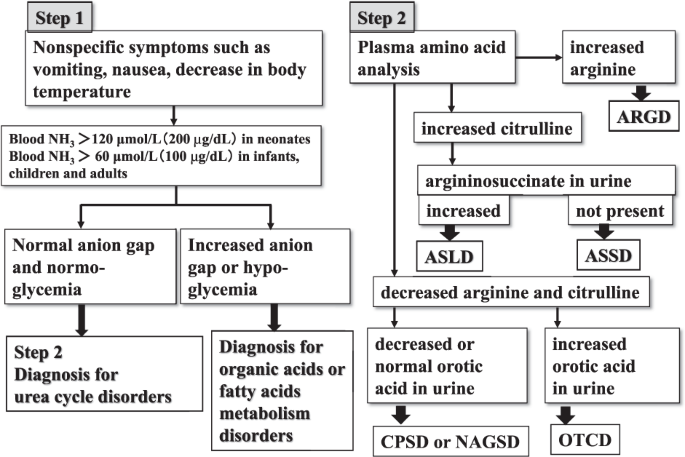
Urea Cycle Disorders Update Journal Of Human Genetics

Urea Cycle Disorder An Overview Sciencedirect Topics

